The project will be implemented through the Aga Khan Rural Support Programme (AKRSP) and other agencies of the Aga Khan Development Network, drawing on their experience in community-led integrated development.
More than 325,600 people in remote areas of Gilgit-Baltistan are set to gain improved access to clean water, renewable energy, and climate-resilient housing and infrastructure under a newly launched €54.24 million project.
This will be done through the Gilgit-Baltistan Rural Development and Climate Resilience Project, which was formally launched at the Chief Minister Secretariat in Gilgit this week.
The initiative will establish 216 water-supply and sanitation schemes, introduce climate vulnerability assessments across all 110 union councils, and develop micro-hydropower and other clean-energy systems with an expected generation capacity of 1.2 to 1.3 megawatts.
It will also support the green retrofitting of 3,000 existing homes and the construction of 700 climate-resilient, energy-efficient houses, while providing communities and public institutions with training in climate-responsive planning, enterprise development, and sustainable infrastructure management.
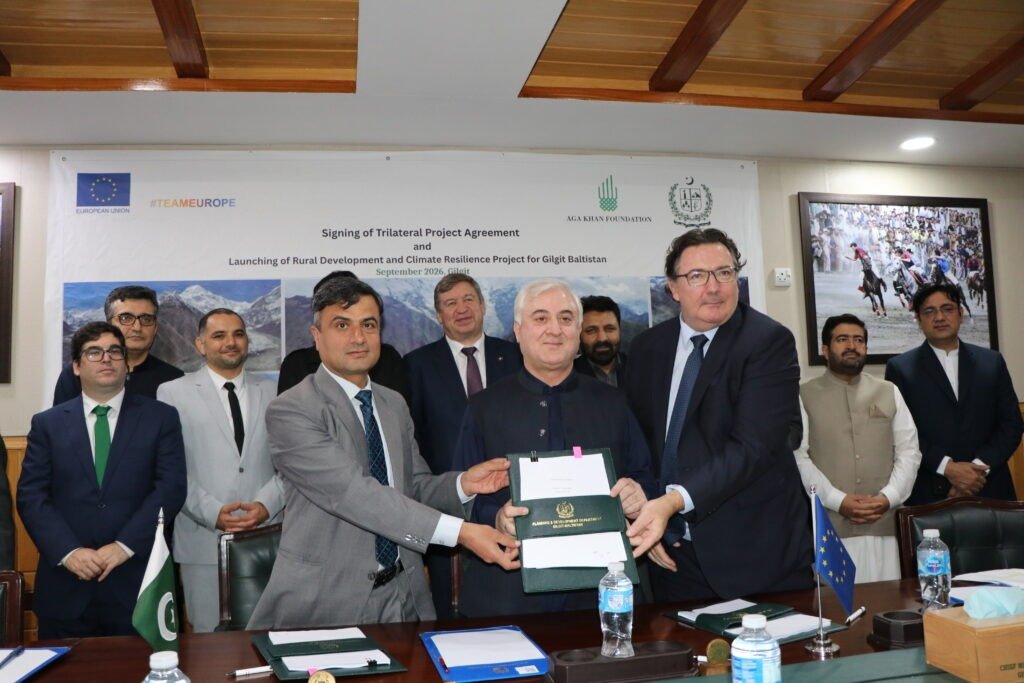
Representatives of the partner organisations sign the Gilgit-Baltistan Rural Development and Climate Resilience Project agreement in Gilgit.
The project is being undertaken by the Government of Gilgit-Baltistan in partnership with the European Union, Agence Française de Développement (AFD), and the Aga Khan Foundation.
More than 325,600 people in remote areas of Gilgit-Baltistan are set to gain improved access to clean water, renewable energy, and climate-resilient housing and infrastructure under this project
The agreement was signed in the presence of EU Ambassador to Pakistan Raimundas Karoblis and Gilgit-Baltistan Chief Minister Amjad Hussain Advocate.
Speaking at the launch, Ambassador Karoblis described the initiative as an important milestone in the shared commitment to a sustainable and climate-resilient future for Gilgit-Baltistan.
He reaffirmed the European Union and its European partners’ support for translating the project into practical improvements in the lives of local communities and supporting an inclusive transition towards a greener economy.
The project will be implemented through the Aga Khan Rural Support Programme (AKRSP) and other agencies of the Aga Khan Development Network, drawing on their experience in community-led integrated development.
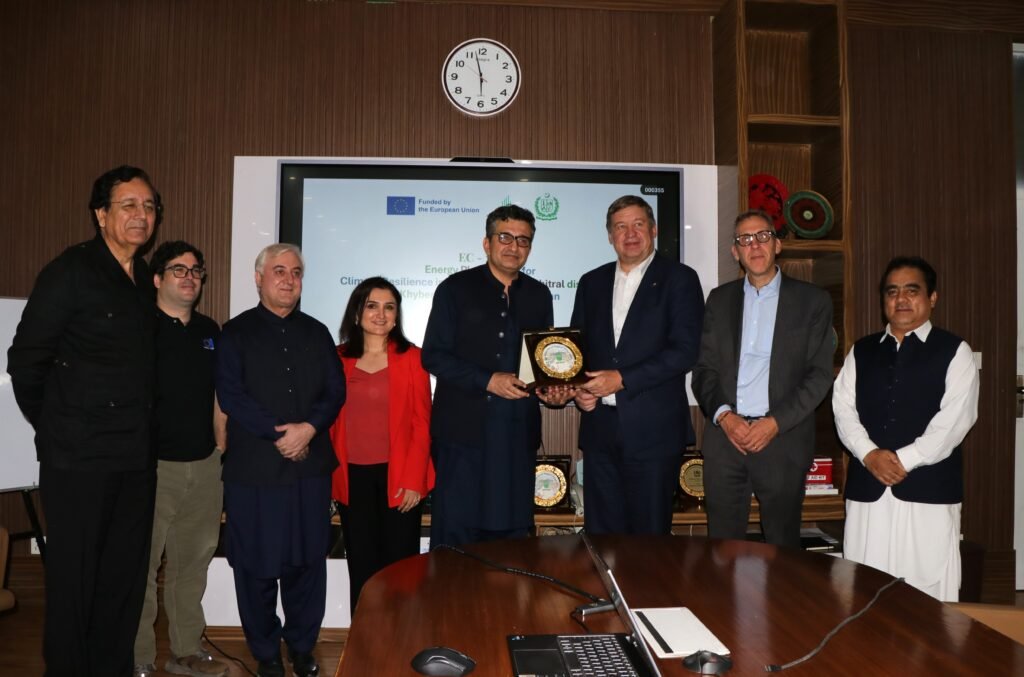
EU Ambassador Raimundas Karoblis assured the European Union’s continued support for climate resilience and sustainable development in Gilgit-Baltistan.
Following the signing ceremony, Ambassador Karoblis was briefed on another EU-funded initiative, Energy Plus: Energy for Climate Resilience, being implemented across all 10 districts of Gilgit-Baltistan and Upper and Lower Chitral in Khyber Pakhtunkhwa.
The five-year Energy Plus initiative is expected to benefit more than 350,000 people, including approximately 171,500 women, by supporting the transition towards a climate-resilient, low-carbon economy.
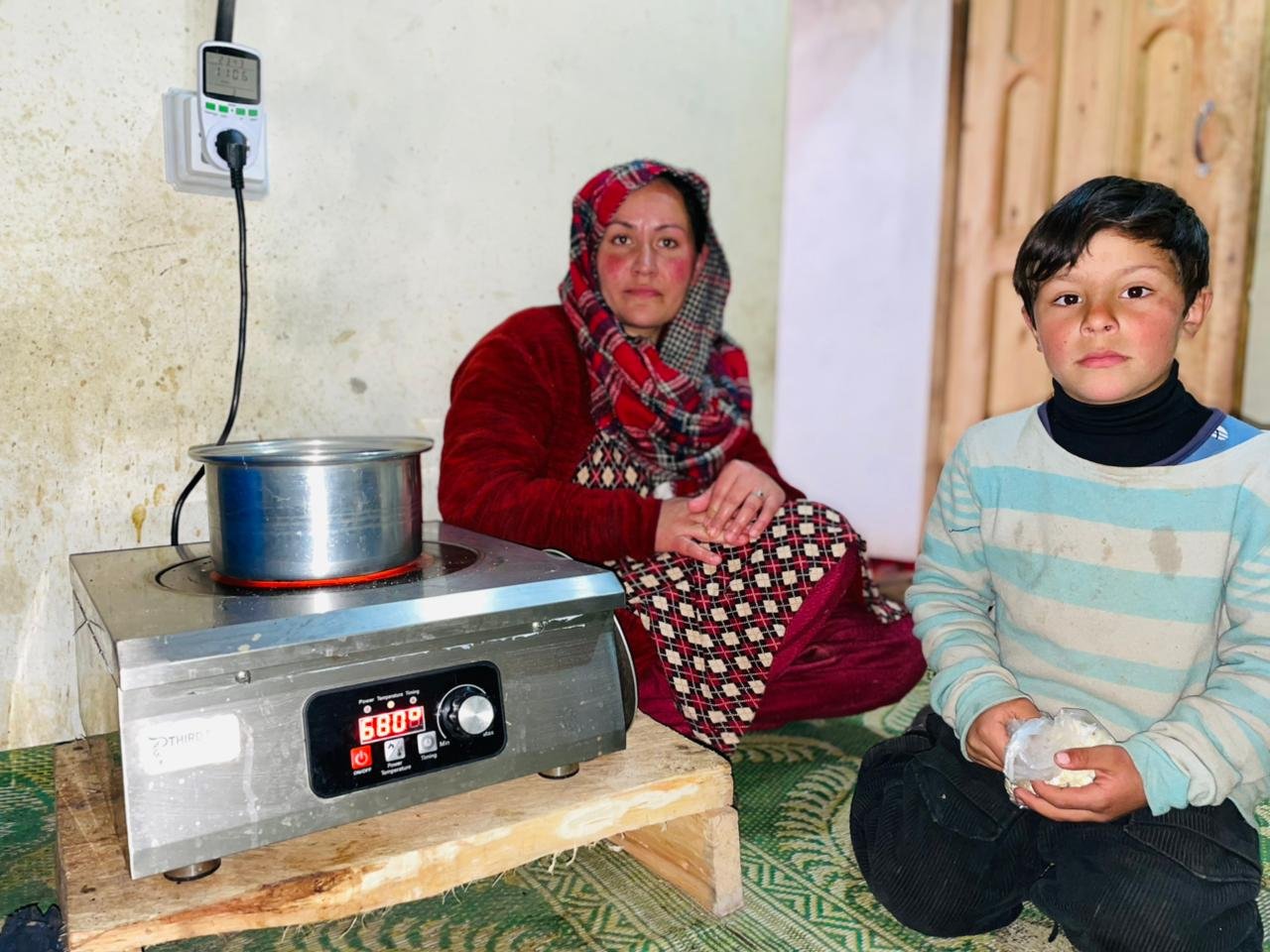
Under the programme, AKRSP is constructing three new micro-hydropower plants and rehabilitating four plants damaged by the 2022 floods. The interventions are expected to add around 1.8 megawatts of community-owned renewable-energy capacity and improve electricity access in remote and off-grid communities.
The NGO is also establishing eight renewable-energy-powered technology hubs to provide digital skills, high-speed internet, entrepreneurship support, and green economic opportunities to around 10,000 young women and men.
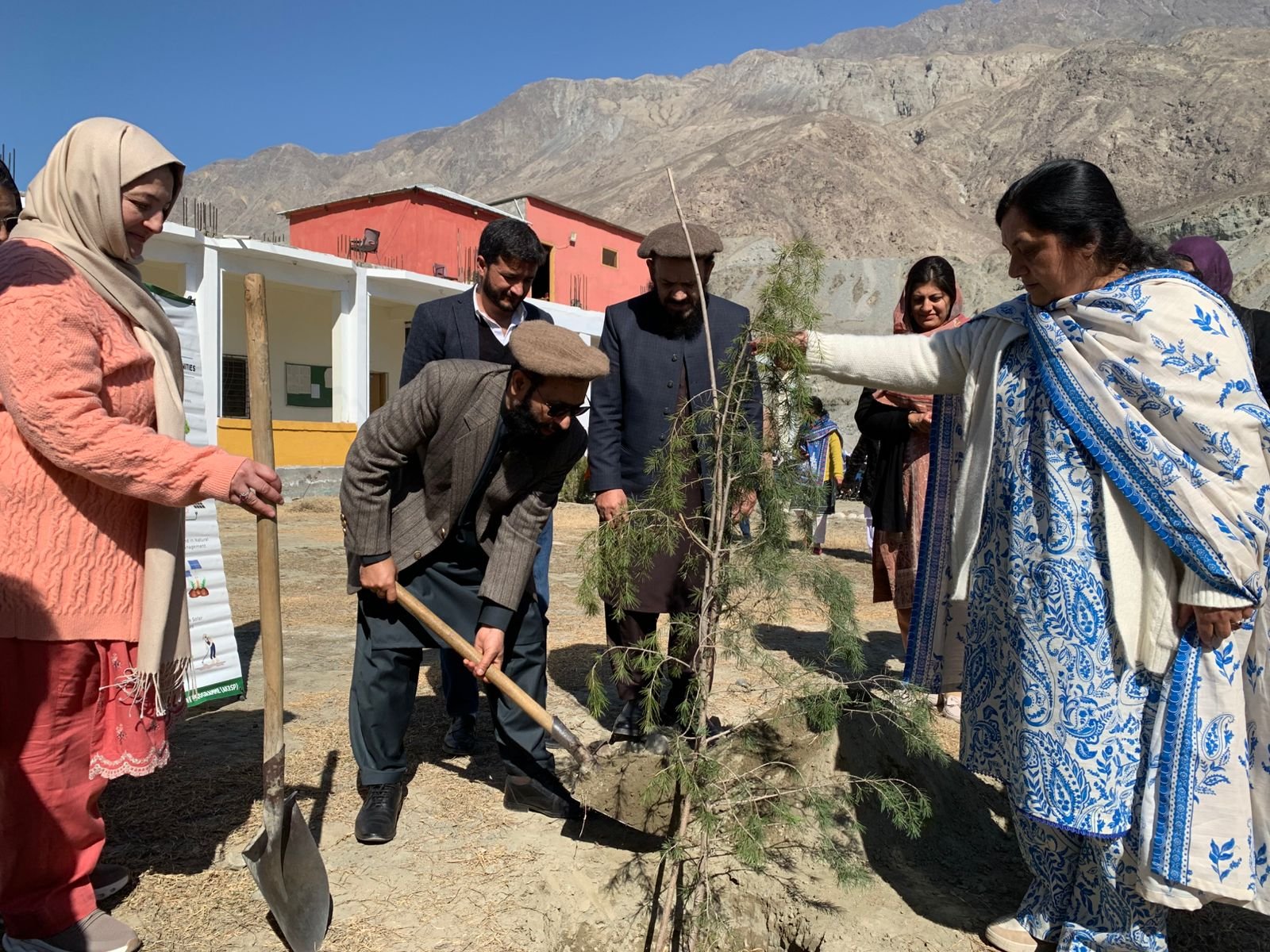
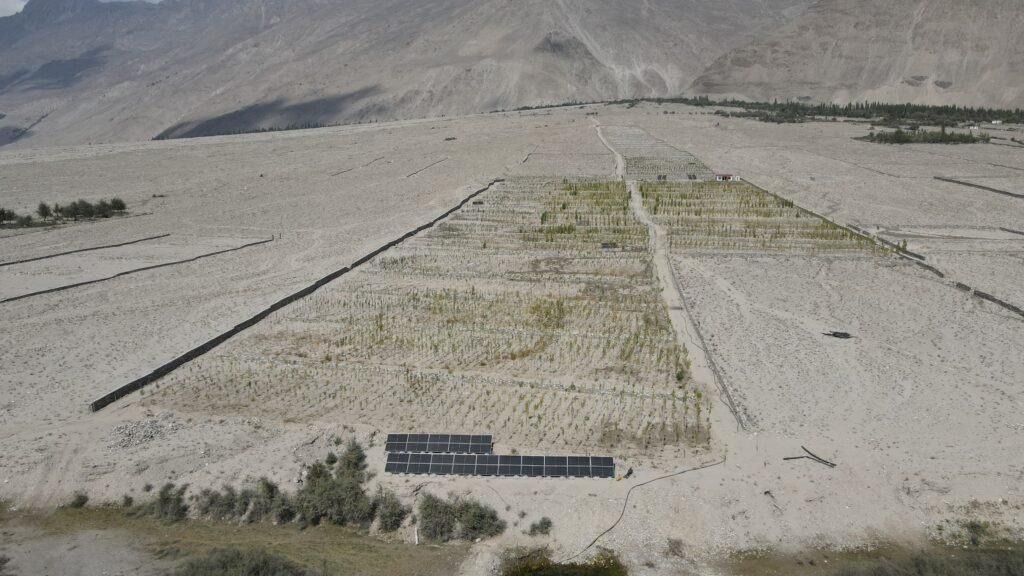
The Energy Plus programme also includes a large-scale afforestation drive. In Kashmal Valley, Shigar, more than 43,000 trees have already been planted.
The programme includes the rehabilitation and installation of 48 irrigation systems, including renewable-energy-powered water-lifting schemes. These interventions are expected to benefit around 2,000 households and bring approximately 265 hectares of previously barren land under irrigation.
A further afforestation component aims to plant around 2.6 million trees across 383 hectares to restore ecosystems, reduce pressure on forests, and strengthen the resilience of mountain communities to climate-related shocks.
Established by the Aga Khan Foundation in 1982, AKRSP has worked with government institutions and local communities across all 10 districts of Gilgit-Baltistan and the two districts of Chitral.
In 2024, AKRSP expanded its programmes to the coastal districts of Thatta, Sujawal, and Badin in Sindh, extending its community-led development approach to climate-vulnerable coastal communities.
Original Source: The Friday Times
Read more: €54.24m Project To Expand Clean Water And Renewable Energy Access In GB