By: Fozia Qayum, Civil Society Officer
In the quiet, conservative valley of Daneen in Chitral Pakistan, conversations around women’s health used to be whispers, if they happened at all. Mothers didn’t talk about what to eat during pregnancy. Daughters learned myths, not facts. Contraception was off-limits, something only whispered about, if ever. The malnutrition and lack of access to reproductive health information deeply affected the wellbeing of women especially pregnant and lactating mothers.
Asma Hayat, a 27-year-old mother of three, remembers those days clearly. “I didn’t know what to eat when I was pregnant, or how to space my children. We just did what our elders told us,” she says.
But change, when it came, started small, with a group of determined local women.
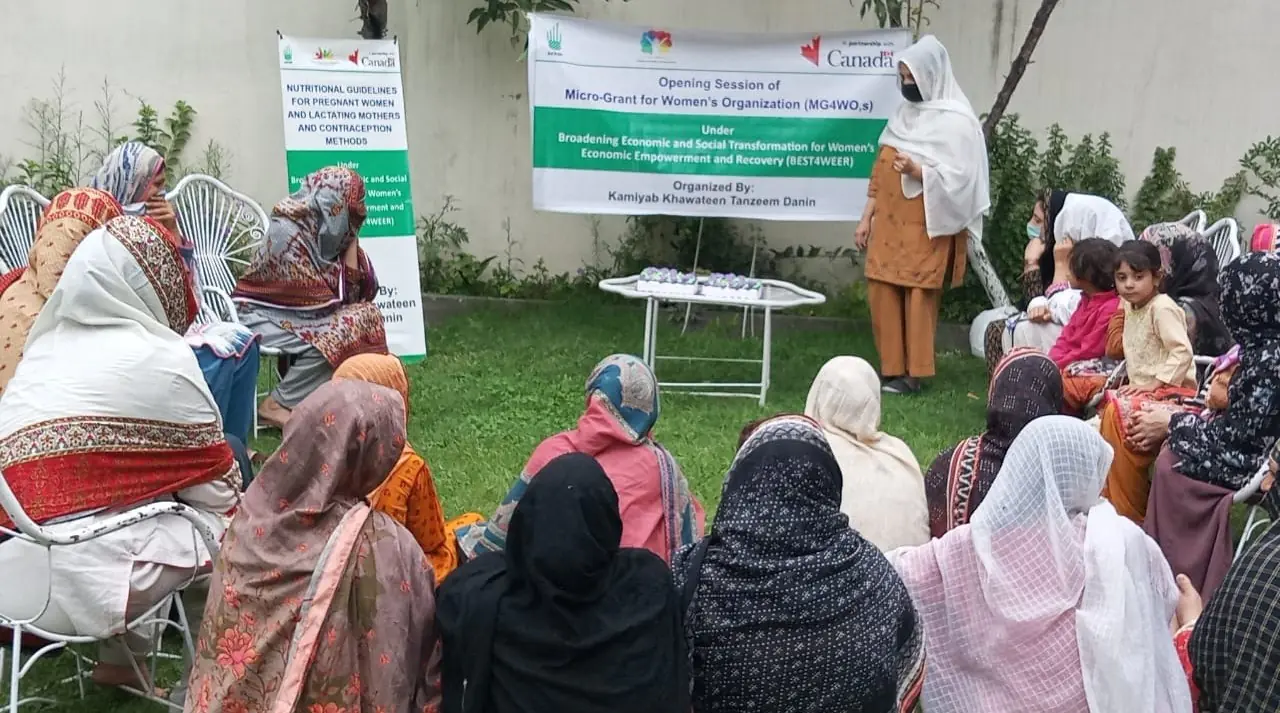
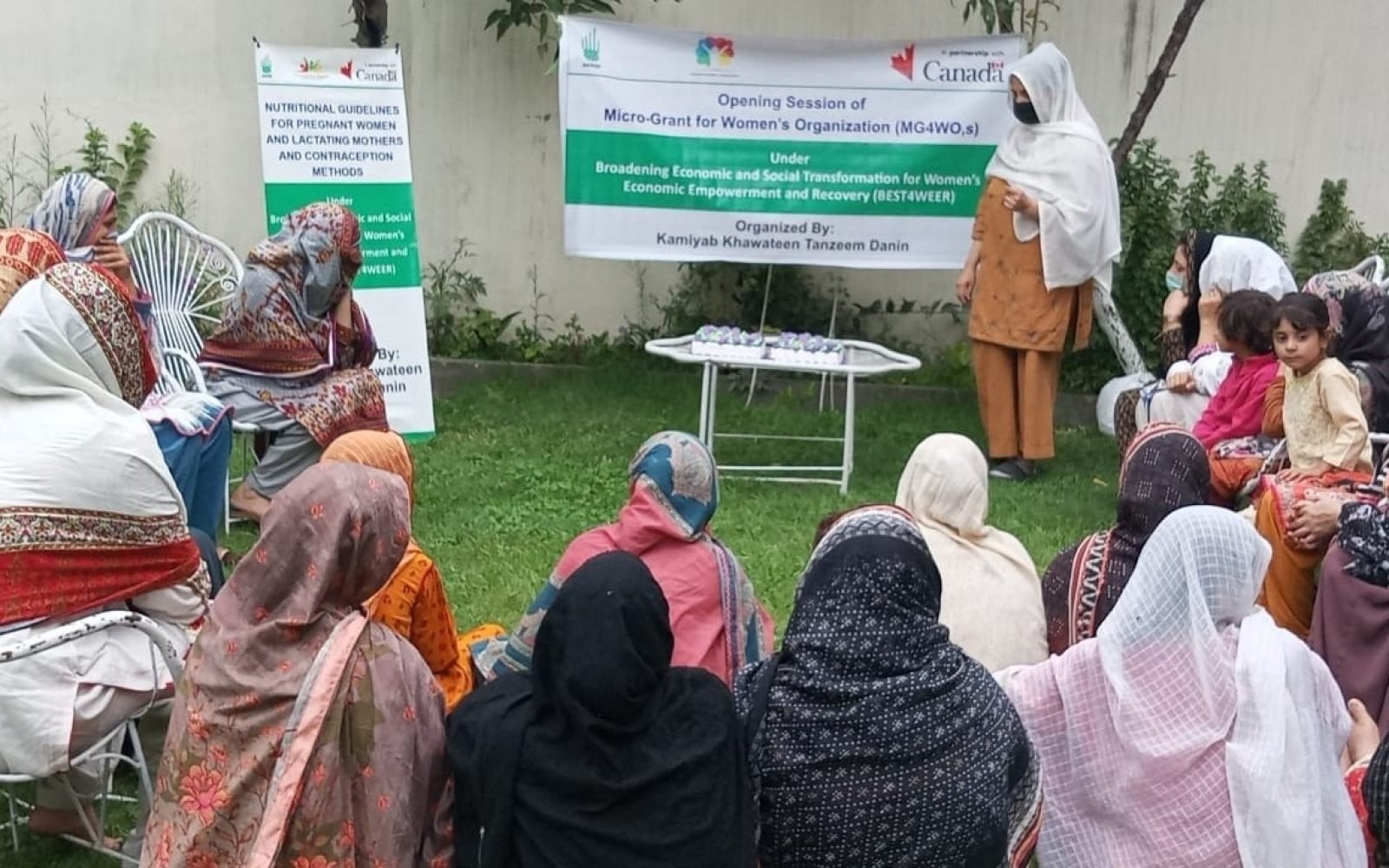
The Kamiyaab Khawateen Tanzeem, a community-based women’s organisation, took on a mission: to break the silence around maternal health, nutrition, and reproductive choices. With support under AKRSP’s Microgrant for Women Organization (MG4WO), they launched a campaign to reach women who had never been included in such conversations before.
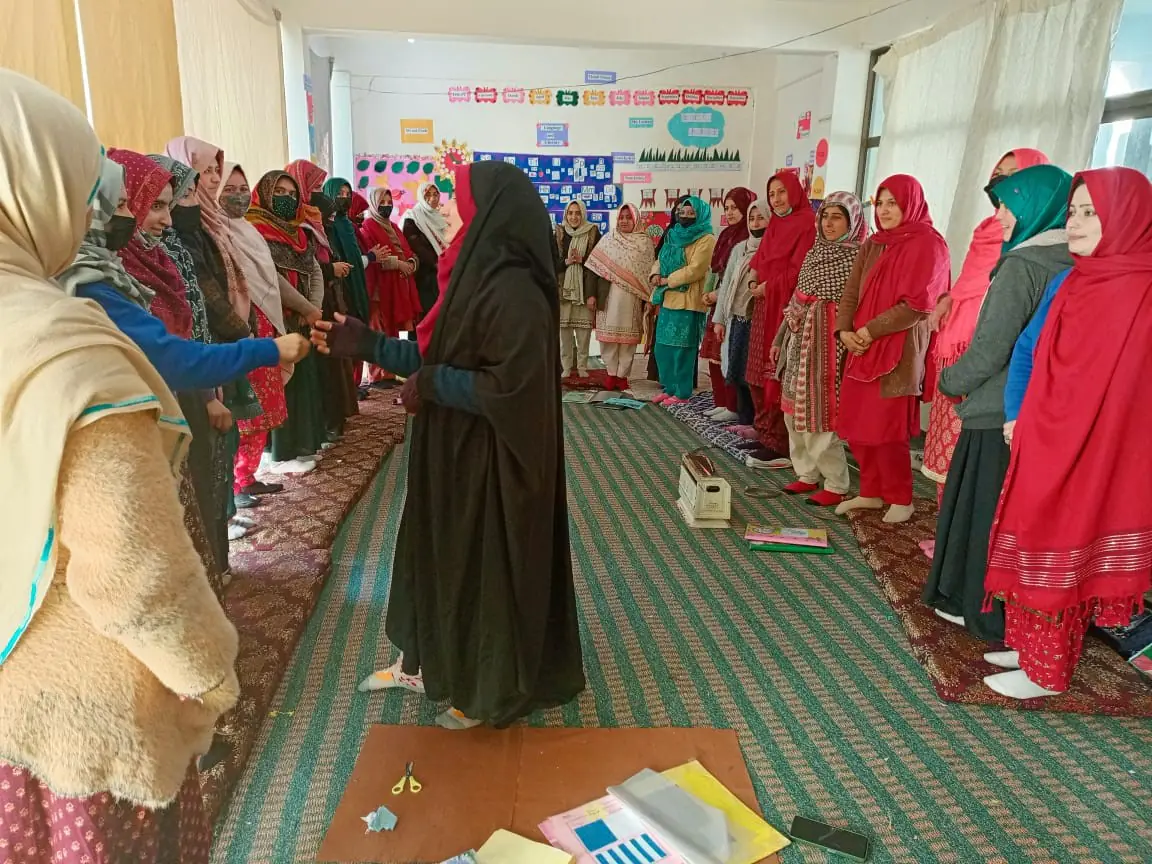
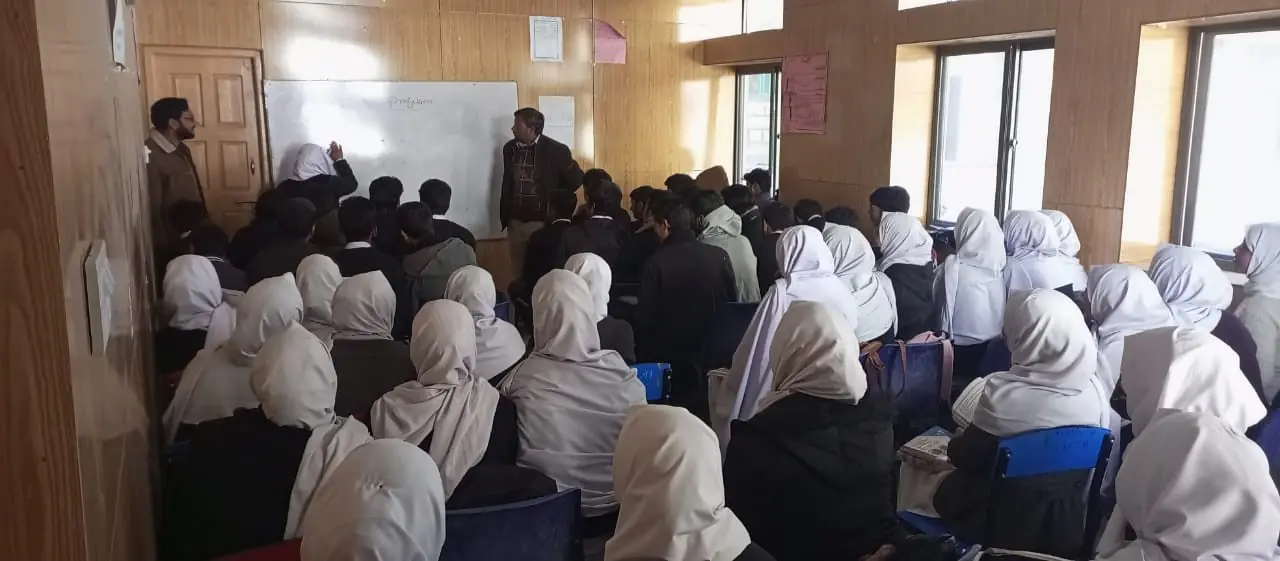
They directly engaged 149 women and reached another 300 indirectly through an intensive community outreach effort. The campaign included nutrition education sessions led by a trained nutritionist, and awareness sessions on contraception and accessible healthcare services. Rather than relying on outside experts, Kamiyaab Khawateen Tanzeem mobilised local schoolteachers, CBSG members, and young women volunteers to spread accurate information in ways that felt familiar and trustworthy.
The Micro Grants for Women Organisation (MG4WO) is an initiative of the Aga Khan Rural Support Programme (AKRSP), launched in 2022 under the GAC-funded BEST4WEER project to strengthen grassroots women’s organisations across Gilgit-Baltistan and Chitral. Through small-scale but high-impact grants, MG4WO empowers local women organisations to identify and address pressing community challenges—from healthcare and education to livelihoods and social change. Under the MG4WO, AKRSP has awarded more than 400 microgrants in Gilgit-Baltistan, and Chitral, sparking powerful stories of transformation. The journey of Kamiyaab Khawateen Tanzeem is one of the most compelling examples of what happens when local women take the lead.
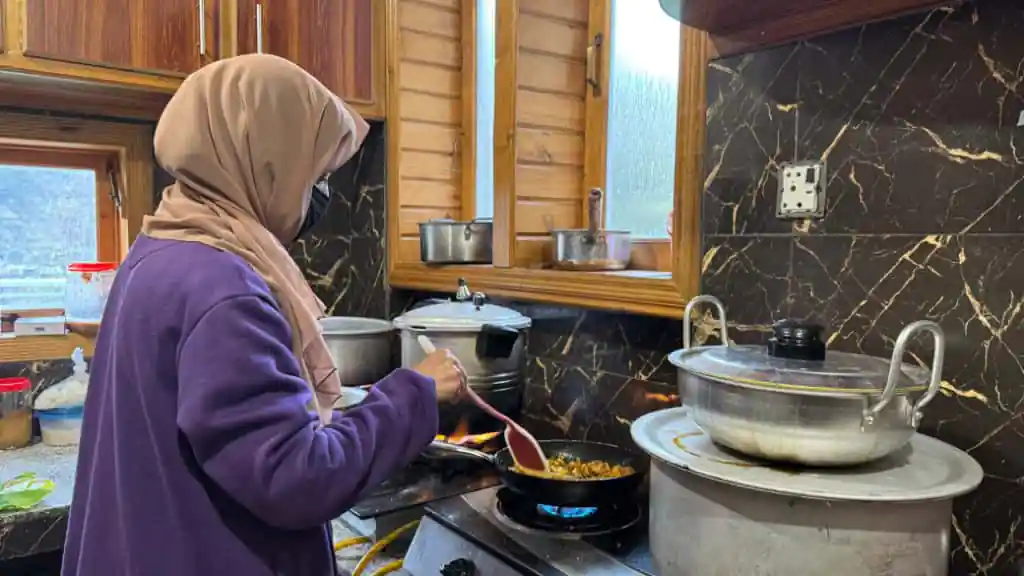
Kamiyaab Khawateen Tanzeem’s sessions were simple but powerful: what foods support a healthy pregnancy, how to care for a lactating mother, what family planning options exist, and where to find support. For many women, it was the first time anyone had asked them about their needs.
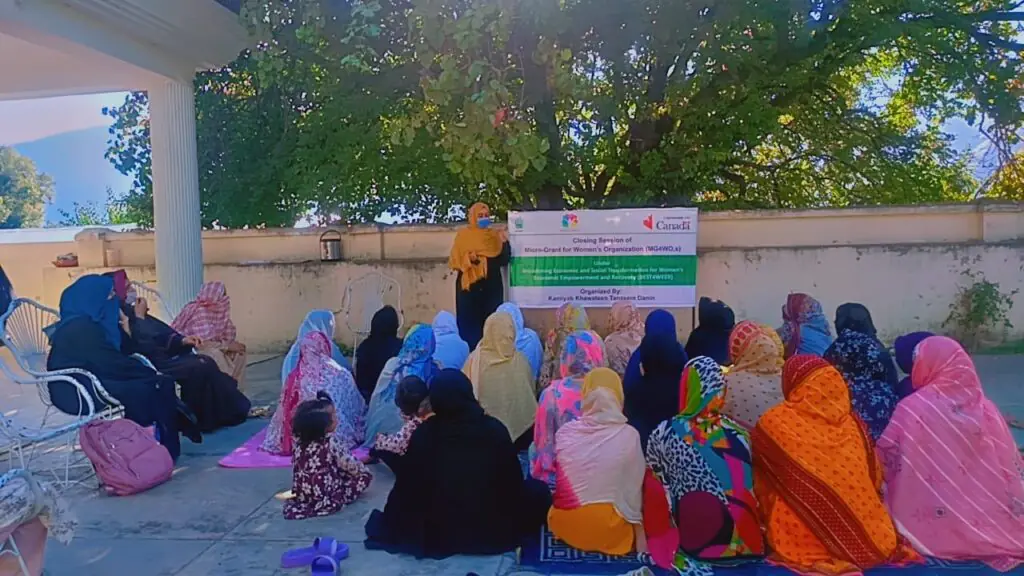
“I started eating vegetables and nuts. I didn’t know before that these could make such a difference for me and my baby,” shared one lactating mother with quiet pride. Another said, “For the first time, I talked about what to eat during my period and pregnancy.
The shift wasn’t just personal—it became community-wide. Women began visiting local health centres. These facilities recorded a slight but promising increase in visits by women seeking contraceptive counselling. This suggested something long overdue: trust was building. Husbands and mothers-in-law, once gatekeepers, became curious allies.
But the journey didn’t just transform the community. Kamiyaab Khawateen Tanzeem itself grew stronger. Organisers built relationships with health professionals, gained new confidence, and earned the trust of women who had never before left their homes for such conversations.
Perhaps most importantly, they sparked something long-lasting: belief. Belief that women in Daneen can take charge of their health. That they can nourish themselves, space their children safely, and speak up for what they need.
This micro grant not only helped dispel deep-rooted cultural myths surrounding nutrition and contraceptive use but also led to a visible increase in women engaging with local health care centres. More women are now confidently discussing their needs with their families and prioritising both their own health and that of their children.
The community now holds a foundation of knowledge, and women continue to advocate for their health and rights. One challenge remains: maintaining momentum beyond the grant period. Yet, with ongoing support and peer-to-peer engagement, the women of Daneen are firmly on the path to building healthier families and more equitable futures.
The grant may have ended, but the ripple effect continues. Myths don’t vanish overnight, and systems take time to change—but one truth stands strong: empowered mothers lead to empowered communities. And thanks to the courage of a few women in Daneen, that change has already begun.